And how did Worth Street, Penrith NSW get its name?
Simply enough, Worth Street Penrith was named after government surveyor in the Lands Department Charles Worth. He was Daniel James Woodriff’s son-in-law. Woodriff was owner of the 1000-acre Rodley Estate spanning from Woodriff Street to the Nepean River, Boundary Creek to Jamison Road. The town of Penrith grew out of this estate. Woodriff’s descendants still live in Penrith, in Combewood, the home built by Woodriff’s son, Francis Henry Woodriff.
On 21 June 1877 Charles Worth married Florence Anna Woodriff in All Saints Anglican Church Petersham. She was the 24-year-old second child and daughter of Daniel and Jane Woodriff. Up until the death of Daniel in 1865, the Woodriff family lived at Newlands house, Parramatta. Afterwards, Jane moved her family to Ormley, a more modest home in The Boulevarde Petersham. Florence and her elder sister Agnes lived with their mother while the younger brothers Frederick and Francis were still at school. It is unknown the circumstances of when and where Charles and Florence met, but they would have moved in similar circles of society. When they married, a marriage settlement (dated 20 June 1877) ensured Florence would retain her inherited financial independence. Also, Charles received shares and was made a trustee, along with Jane Woodriff, of Florence’s finances.
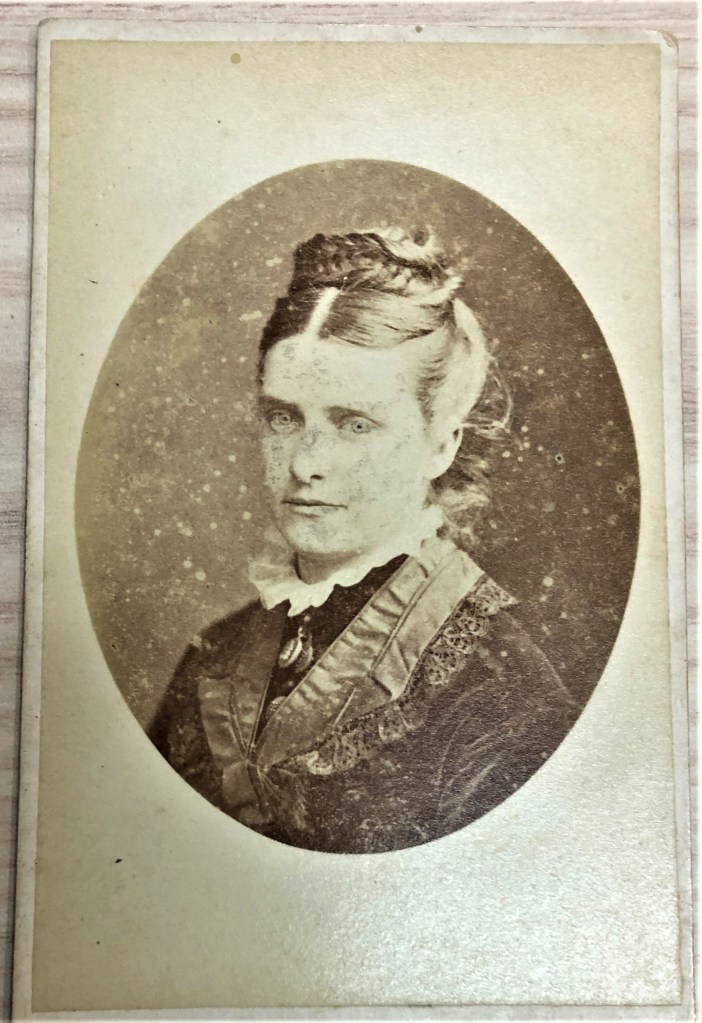
Florence as a young woman, before her marriage to Charles Worth
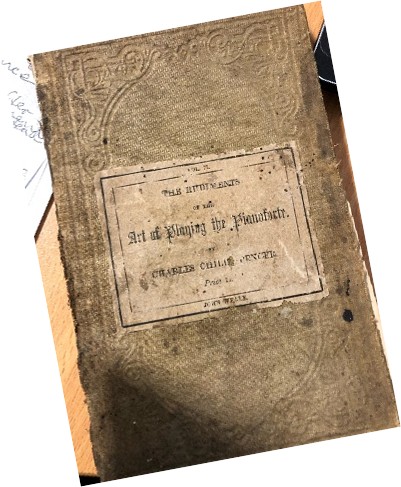
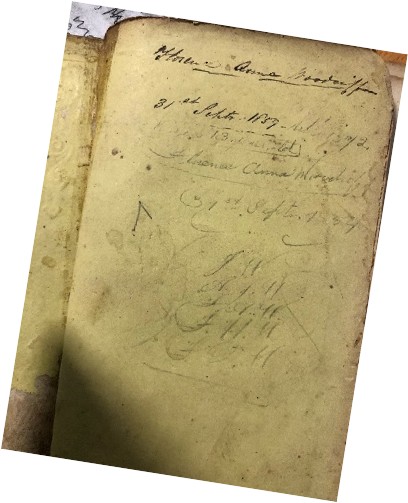
Charles was 40-years old when he married Florence. He was born in the British protectorate of Vido Island, Corfu in 1837, the third of five children born to Samuel and Isabella Worth. Private Samuel Worth was stationed in Corfu in the Royal Sappers & Miners.
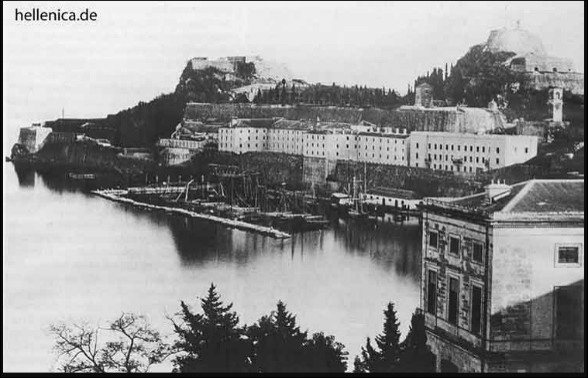
Corfu had been under British rule since 1815 after defeating the French in several battles. The French held out in Kerkyra (Corfu) until 1814. The Treaty of Paris in 1815 turned the islands into the ‘United States of the Ionian Islands’ under British protection. There were usually at least two infantry battalions stationed there. The British improved roads, communications, and education and justice systems. The small island of Vido is situated at the mouth of the port of Corfu. It is now known for its natural beauty and beaches. Samuel had served in the British Army since 1816 in France and Bermuda, and then for eight years in Corfu. Samuel and Isabella had their first child William, born in Bermuda, in 1829 and three children born in Corfu/Vido Island: Mary Harriet 1834; Charles 1837; Isabella 1838. In August 1840, Samuel was injured in his work on a construction site and was repatriated back to England for treatment, followed by his family.

GRO overseas birth registrations – Corfu
Samuel was deemed to be ‘worn out and permanently unfit for military service’ and was awarded a pension. Soon after their arrival in England another son, James was born. In the 1841 census the family were living in Charlton, Greenwich with Isabella’s parents Charles (also British Army) and Hannah Ross. In December 1842, two months after the death of his mother, thirteen-year-old William joined the Royal Sappers & Miners. After contracting rheumatism, he was deemed medically unfit for military service and discharged in 1847.
By 1851 Samuel, a widower, daughter Isabella and son James were living in Hythe, Kent. Fourteen-year-old Charles Worth was in military school. Alongside the regimental schools there were two boarding schools for children of serving or deceased soldiers. These were the Royal Hibernian Military School in Dublin and the Royal Military Asylum for Children of Soldiers of the Regular Army in Chelsea where Charles was boarding. He was living with 100 boys aged between 12 and 17. Their birthplaces reflect British presence and dominion around the world. Charles’s natural progression would have been to also join the British Army. However, there is no current evidence for that, nor can he be found in the 1861 or 1871 English census records. One can only imagine where he lived and the experiences he had before his decision to emigrate to New South Wales. Charles may have spent time with his brothers, or sisters who had also married military men.
One sister, Isabella emigrated to Victoria. She had married soldier Edward Poole in 1858 and they spent time in Corfu and Ireland where Edward was stationed. Sometime after Edward had died in 1868 in Stoke Damerel Devon, Isabella emigrated to Victoria. A daughter Isabella married a Navy seaman and remained in England. A son Robert (James Robert) also emigrated to Victoria, married and lived in Victoria.
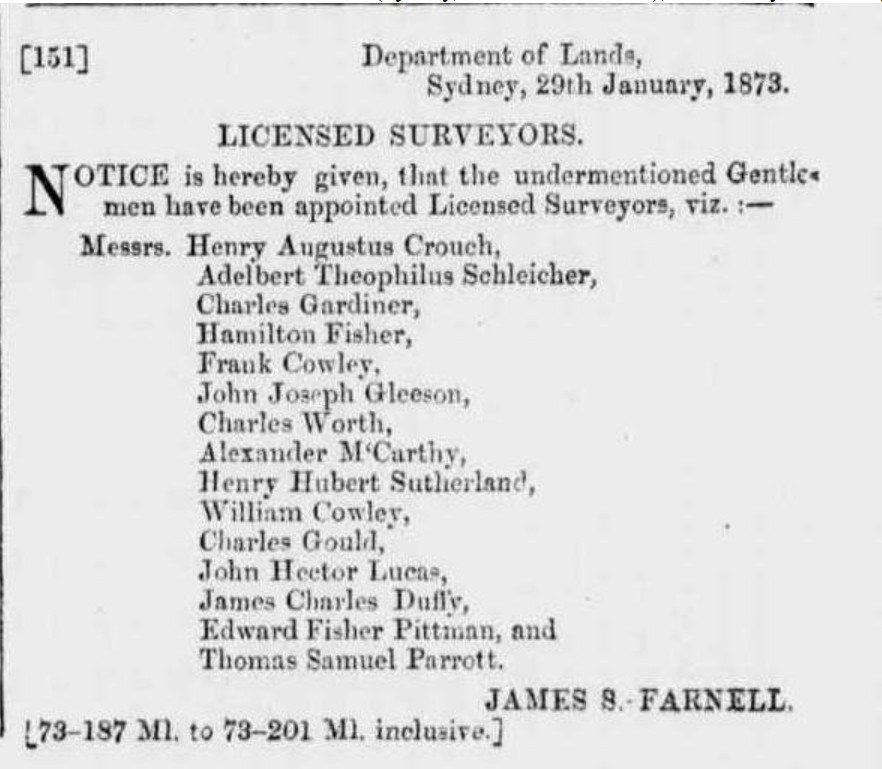
The first evidence of Charles living in New South Wales can be found in the NSW Government Gazette, 29 January 1873 and the NSW Public Service Lists when he is appointed a licensed surveyor in the Department of Lands. He worked for that department and later the Department of Mines and Agriculture. In 1876 Charles was appointed to the Merriwa district and it was here where Charles and Florence lived in the early years of their married life. He was especially employed to do survey work under the Real Property Act (1861) determining property boundaries. His salary was £1690 a year.

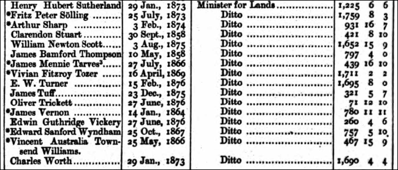
He would be away from home for weeks or months at a time. In 1880 Charles was undertaking survey work on gold leases in the Gulgong district. Florence remained financially independent from Charles with an income from her share portfolio and lending money as a mortgager, one of which was on the Merriwa Anglican Parsonage.
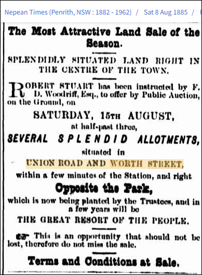
Following the deaths of Florence’s parents, the Rodley Estate was partitioned in 1881 between her brothers Fred, and Frank. In 1884, Charles undertook an extensive boundary survey of the Woodriff estate for his brothers-in-law. It was at this time that Worth Street was formed on Fred Woodriff’s Rodley Estate. Samuel Jackson undertook the survey work on the subdivision of the estate. The first reference to Worth Street in the Nepean Times appeared on 8 August 1885 in a land sale advertisement. The following year Penrith Council took over the maintenance of several streets including Worth and Station Streets and Union Road.
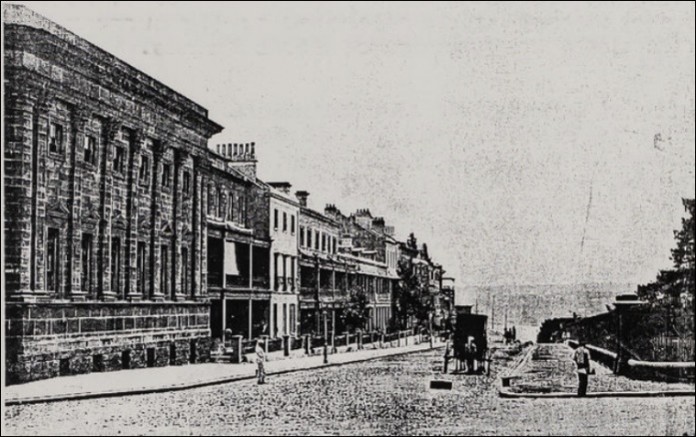
In 1886, and with £1500 in savings, Charles and Florence went on a trip to England. They returned in November 1887 and moved into in a rented apartment at 137 Macquarie Street Sydney, across from the Botanical Gardens, and next door to what is now RAHS’s History House. They lived off the income from their shares and mortgages. In May 1888, Florence lent her brother Fred £1700. She also purchased land in South Australia from their landlady Martha Page, who found herself in financial difficulties and bankruptcy after she was swindled by her solicitor.
In 1888 Charles invested some of his and Florences’s money in the Australasian Trust Management Assurance and Investment Company. Charles believed they had been duped by company directors, but in turn the company sued him and others in the Equity Court. Part way through the case, Charles withdrew, but was held liable for his share of costs for the whole case after they lost. Prolonged court proceedings forced Charles into bankruptcy in 1890. It was a complicated affair involving hundreds of shares owned by himself and Florence. His shares and her shares were a tangled web with Fred Woodriff acting as his sister’s trustee. On 12 May 1891, Charles was vindicated and received his certificate.
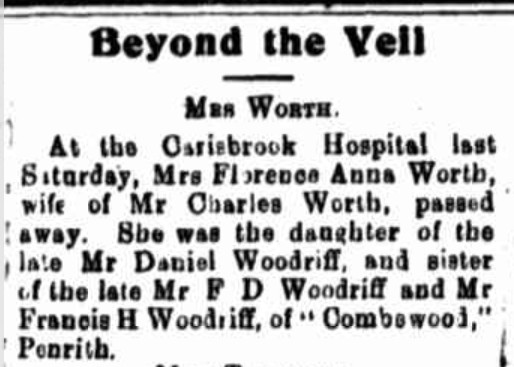
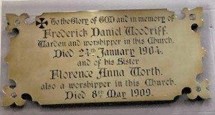
In the early 1900s Charles and Florence moved to the San Diego apartments, 45 Macleay Street Potts Point. Florence died on 8 May 1909 in Carisbrook Hospital, further up Macleay Street. They had no children and in her will Florence released two debts: the Anglican order Sisters of the Church Sydney Centre of £500; her brother Frank of £1430. She then left the residue of her estate valued at £4566 to her husband Charles.
Sadly, Charles’ sister Isabella died six months later in Victoria on 29 November 1909, survived by her widowed son Robert and his children.

In September 1910 Charles sailed on the SS Runic to London presumably to visit his sister Mary Self in Saltash, Cornwall and possibly the family of his deceased wife. He returned in September 1911 to Victoria and to where his nephew Robert, also a surveyor, was living in Bryson Street Canterbury, Victoria. In 1913 Charles travelled to Sydney. On 12 August 1914, in lieu of her father, Charles stepped in to ‘give away’ Irish nurse Sheila McKean when she wed Allan Woodriff in St Stephens Church Penrith.
Charles also provided written evidence in the court case between Minnie Everingham and Penrith Council. The dispute related to Penrith Council’s assertion of the validity of Woodriff Street (south). Although he was not a witness in the case, Charles provided a statement on 3 November 1914 regarding his survey work in 1884 of Fred Woodriff’s land along the south side of High Street. While in Sydney Charles also made his will, dated and signed in Sydney on 15 October 1915. He returned to Victoria in about 1923 to live with his nephew Robert Poole in Bryson Street Canterbury.
On 10 July 1924, Charles Worth died at home. He was buried in Box Hill cemetery. In his will he left legacies to his sister Mary Self, his nephew Robert Poole and his children. He also left Florence’s nieces, her brother Frank’s daughters, Jane Florence Ellen Woodriff, Margaretta Mary Woodriff and Phyllis Muriel Woodriff, £200 each. The Melanesian Mission and the New Guinea Mission also received a legacy in his will.
So now we know the back story to Worth Street Penrith and who was the man behind the name.
Lorraine Stacker
Combewood Archivist
Sources:
Ancestry.com & Fold3 (military records)
City of Sydney Archives
FindMyPast.com.au
NSW BDM certificates
NSW State Archives:
Bankruptcy file for Charles Worth & Martha Page
Probate Packets for Daniel James Woodriff, Charles & Florence Anna Worth
Penrith City Library: Land Records files regarding the Woodriff estate
Personal communication with Margarite Scott (Francis Woodriff’s great granddaughter)
Trove Newspapers & NSW Government Gazettes
Victorian death certificates

